Workplace Strategy
Why Values-Led Brands Are Quietly Winning the Future
The assumptions behind most workplace decisions were set for a workforce that no longer exists. Here is how to tell, before you commit.
·
5 min read
Relevant to
Design
May 20, 2025 · Work/Shift Insights Issue #7
By Frederic Libet Descorne
I’ve just returned from Melbourne Design Week, and I left with something more than inspiration. I left reassured. Reassured that the values I’ve held throughout my career, things like respect for craft, care for people, and long-term thinking over short-term gain, are not only alive, they are thriving.
What I saw wasn’t a trend. It was a shift. And it was comforting. Because this is the direction I’ve always believed we should be heading in: toward more meaningful, more conscious, more human brands.
Craft Over Hype. Purpose Over Optics.
We’re witnessing a transformation across the design and interiors landscape. It’s not just about what a brand makes. It’s how and why it’s made.
The most compelling businesses today are driven by purpose. They choose craft over churn. Transparency over tactics. People over polish.
And no, this shift isn’t reserved for high-end or so-called luxury brands. It’s happening everywhere. In artisan workshops, independent studios, and global businesses alike. A few certified B Corps and design-led pioneers are already showing what’s possible. But if anything, they remind us how far the rest of the industry still has to go. These values-led brands measure success by impact, not just income.
Consumers are responding. From the data I’ve gathered, nearly 80 percent of people say sustainability matters to them, and more than 60 percent are willing to change what they buy to reduce their environmental impact. Even more telling, brands seen as purpose-driven are growing up to three times faster than their competitors.
Last Thursday evening I had the chance to experience that philosophy firsthand at Armadillo’s Fitzroy showroom during Melbourne Design Week. Their collaboration with designer Tom Fereday, Agra Forma, was a quiet masterclass in restraint and material integrity. Nothing felt forced or performative. As a certified B Corp, Armadillo continues to show what’s possible when commercial growth is grounded in care for craft, for community, and for the planet. They’re not chasing trends. They’re leading by staying true to what matters.
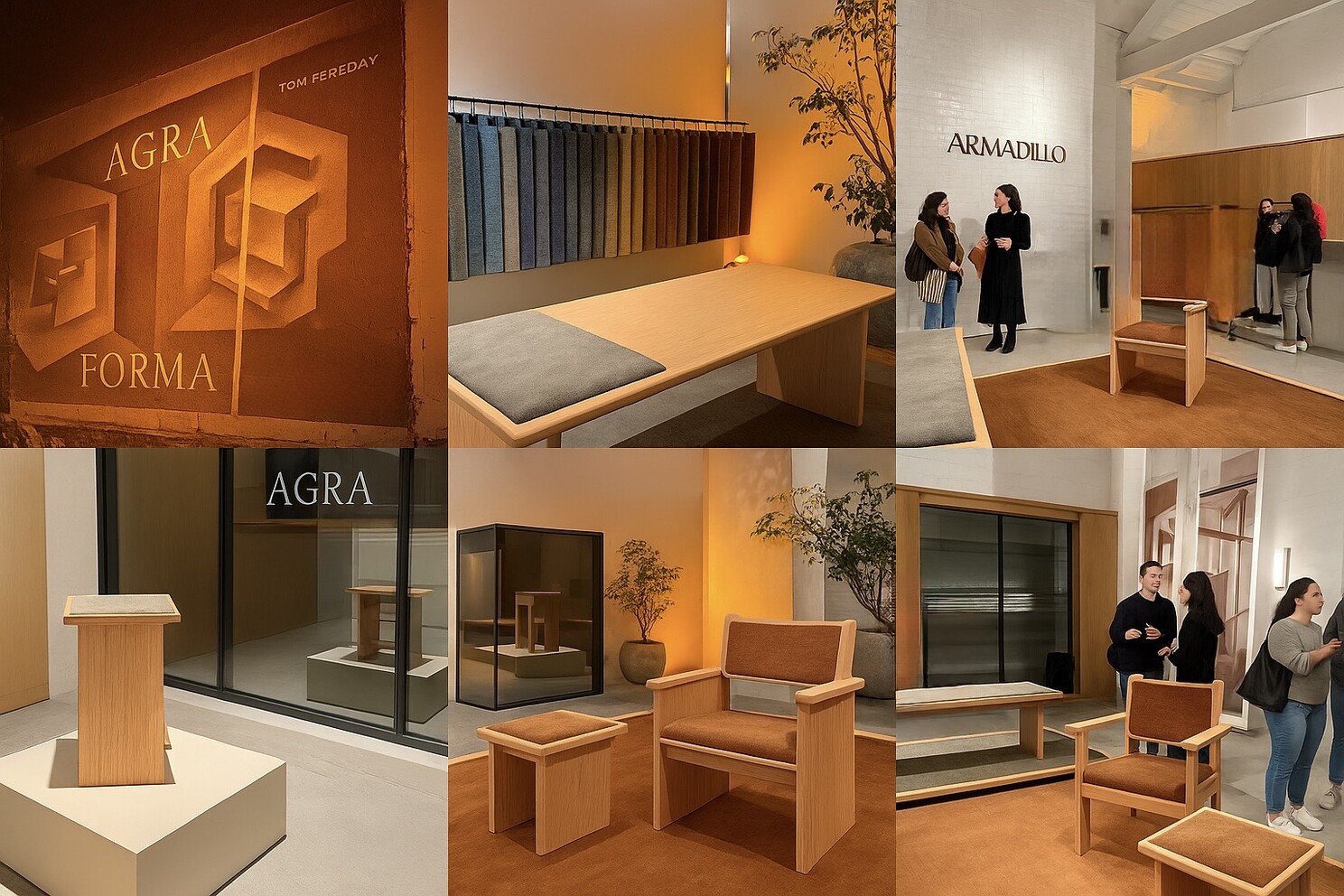
AGRA FORMA - an Armadillo x Tom Fereday collaboration at Melbourne Design Week 2025
I’ve seen this firsthand across the Asia Pacific region. In India, I worked with businesses building regenerative programs that supported both land and livelihoods. In Japan, I witnessed how raw, epured materials are elevated through restraint and intention. Design that honours simplicity and heritage in equal measure. And every time I travel to Taiwan to visit my husband’s family, I’m struck by how naturally the younger generation has embraced a design and lifestyle philosophy that’s both pared back and earth-respecting. It’s not performative. It’s simply how they live. Quietly aligned with nature, intentional in what they bring into their homes, and deeply connected to the idea that beauty and responsibility can coexist.
This isn’t new to me. But seeing it take root so broadly now feels like a moment. A movement, even.
Beyond ESG: Designing for Regeneration
ESG, short for Environmental, Social and Governance, is often used to describe a company’s risk and responsibility lens. But increasingly, leading brands are moving beyond compliance. They’re adopting a regenerative mindset.
What’s regeneration in this context? It’s not about doing less harm. It’s about actively doing good. Restoring ecosystems. Uplifting communities. Revitalising craft. These brands don’t just operate sustainably. They operate generously.
And they’re not doing it for optics. They’re doing it because it works. Purpose-led brands are not only attracting more loyal customers and aligned talent, they’re proving more resilient in shifting markets and more adaptable in uncertain times.
They ask better questions: How can our growth create wellbeing, not just profit? How can we honour every hand and story behind what we make? How can our work leave the world better than we found it?
These aren’t just philosophical questions. They’re strategic ones.
Culture Is the Strategy
In my experience leading teams across APAC, from Shanghai to Sydney, Bangkok to Brisbane, and Pune to Shimla, one truth has stood out: culture isn’t something you bolt on. It’s something you build from.
The most aligned, resilient, and high-performing teams I’ve worked with shared a few core traits. They trusted one another. They believed in what they were doing. And they were led with empathy, not ego.
It’s these same principles I’ve seen in the most successful values-led brands. The ones that grow without losing their soul. The ones that treat their suppliers as partners, their customers as communities, and their teams as people, not just resources.
That’s not just good business. That’s the kind of business people want to work for, buy from, and believe in.
Building the Future: Scale with Soul
But as values-led brands move from niche to influence, the real challenge is scale. How do you grow without losing the care, the craft, the cultural integrity that made you different in the first place? In Asia Pacific, I’ve seen a few businesses begin to crack that code. In Taiwan, a tech company is building circular design into modular electronics, making sustainability something you can actually feel and use. A Japanese homewares brand keeps things slow, grounded, and true to its roots while reaching global markets. The next chapter is about translation, making sure the values travel as well as the product. That means going beyond storytelling and into experience. Imagine loyalty programs that reward circular behaviour, platforms where customers shape the next collection with their values in mind, or digital passports that don’t just trace a product’s past but guide its future. Scaling purpose means building systems that invite people in, not just inform them. If we do that well, we don’t just grow. We lead.
What I’ve Always Believed
The brands that will lead in the years ahead won’t be the loudest. They’ll be the clearest. The calmest. The most human.
They’ll be built by people who listen before they speak. Who care about the story behind the product as much as the product itself. Who believe that success doesn’t have to cost the earth or compromise their values.
This isn’t just good design or good business. It’s what I’ve always believed great brands are capable of.
And now, more than ever, the world is ready for them.
If this resonates or reflects what you’re seeing in your corner of the industry, I’d love to hear your thoughts.
*Special thanks to Skye Healey Ward and the Armadillo team.